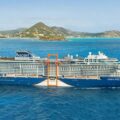
The brochures for s Celebrity Cruises shore excursion in Katakolon, Greece say it’s an opportunity to re-live what it was like to participate in the ancient Olympiade.
Well not exactly re-live it, because the athletes then did their thing in the nude. I can imagine there were a lot of spectators eager to get front-row seats then.
But the shore excursion from Celebrity Ascent’s Greek port stop was an apt opportunity to see the place that athletes from around the ancient world could count on being the permanent site of the big event.
That’s so much easier than the promotional circuses that the modern Olympic Games have become.
As cities jostle to be the host of the next version of the Games, they face spending bilions for the rights to run events that are over in a few weeks. The arguments invariably include the promise that the hassle for locals and hangover for taxpayers will pay dividends because it will put the host city on the map.
Looking at recent host cities, though, you’ve got to wonder whether Beijing, London, Paris or Los Angeles needed to be put on the map. Meanwhile, it’s not entirely clear that school kids today could instantly point to Hammerfest, Sarajevo or Sochi on their globes because the cities hosted the Winter Olympic Games.
A growing list of cities have wisely bowed out of the bidding for the Olympics because they don’t see enough benefits considering the huge costs involved. Brisbane won an almost unanimous vote to run the 2032 Games.
So my visit to the ruins of the original Olympic site got me thinking: With Greece in continued need of economic stimulus and being the birthplace of the Olympics, why not just make Katakolon the permanent home of the Games and skip all the expensive bidding wars in the future?
Here are five reasons why the idea makes a lot of sense:
It Sure Looks the Part
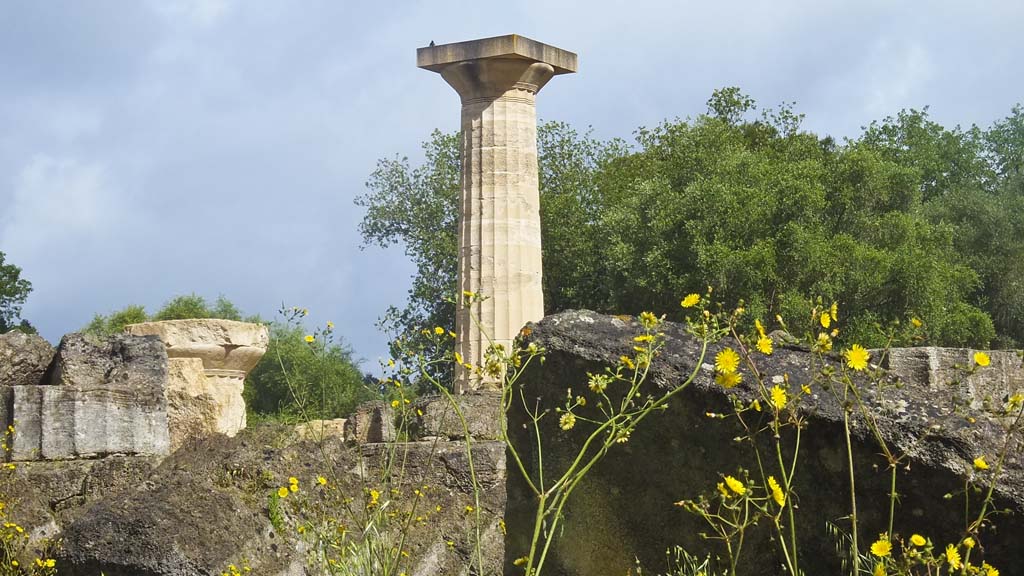
This is not Mount Olympus, as you might think, but relatively flat Olympia. The area was once connected to the mainland, but today it’s become an island that’s lushly forested and green,–which is unusual for Greece.
The first Olympic Games held in 776 B.C. were an annual event until they were abolished in 393 A.D. by a ruler who razed the site. But there are still columns and ruins everywhere that just scream this is the glory that was Greece.
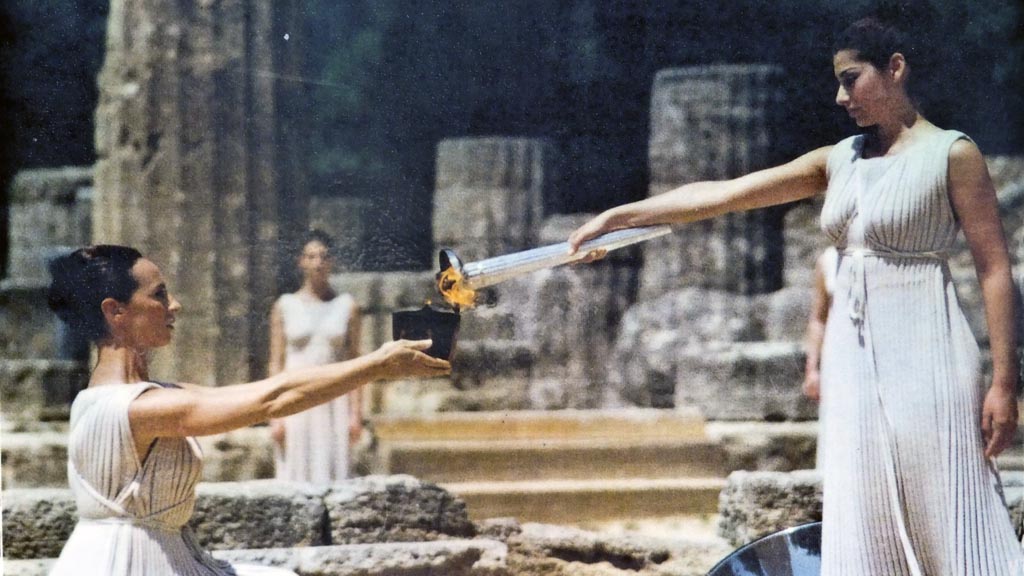
You see the site before every version of the modern Games. The fire pit where the ceremony is held is a central pavilion on the site. It’s where robed and sandaled goddesses light the Olympic torch for its journey around the world.
It’s Centrally Located
It could take three months in the ancient days to get to Olympia, but the contests were a way to create a unity among the diverse states that were under Greek influence. Today, the island takes a whole lot less time to get to by air or sea. It’s more convenient to get to from North America, Europe and Asia than say…Rio de Janeiro or Brisbane.
In the beginning, this was a religious center dedicated to Zeus. Early Hellenic games were only open to free Greeks (not slaves). They became so popular that they were opened to athletes from around the Mediterranean, who would do pilgrimages to participate in the games.
The Layout is Already in Place
The original stadium is still here, with its playing field that was said to be the length of 600 paces of Hercules. Visitors love to do a victory lap around the oval.
There’s a covered colonnade that was the warm up and cooling off area for races. And there’s also the disrobing room, called the Gymnos of course.
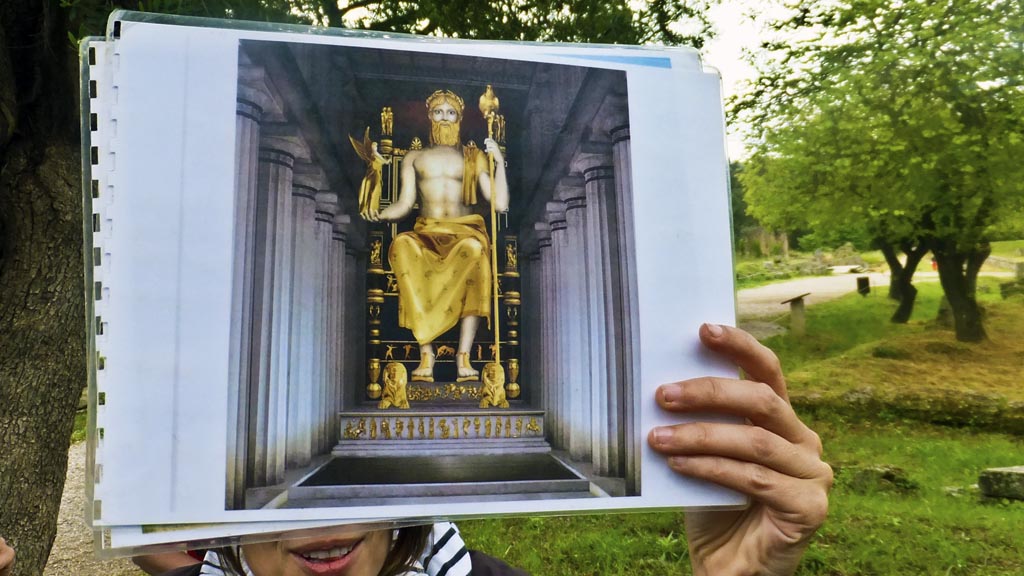
The main temple with its statue of Zeus was one of the ancient wonders of the world and on the original bucket lists of B.C. must-sees. The original temple collapsed during an earthquake and the gilded statue disappeared, but there’s still a very solid foundation on temple hill and chunks of the columns are still stacked around the hill.
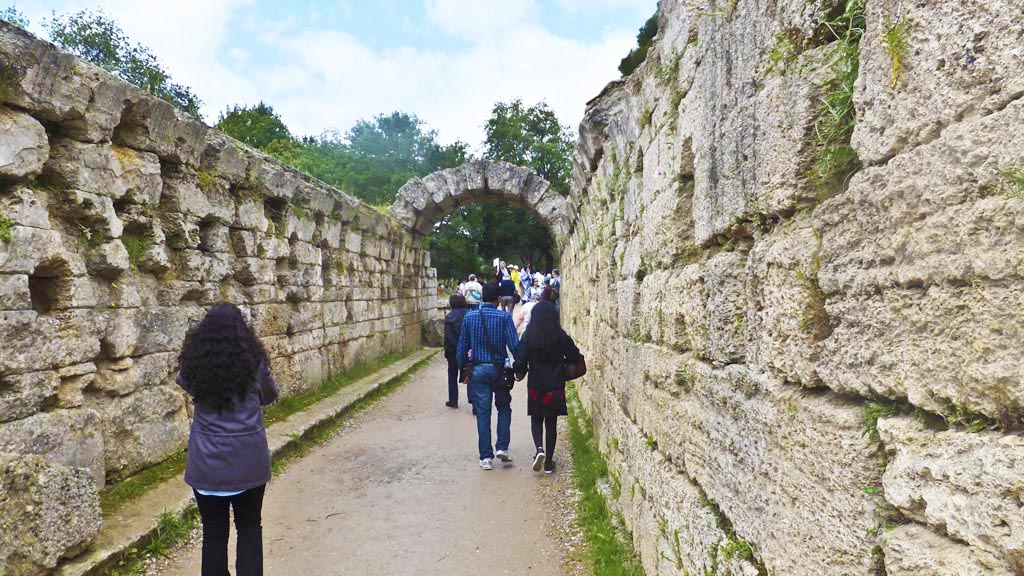
Along the Walk of Fame leading to the entrance to the stadium, there were once thousands of stone monuments commemorating great achievements of winning athletes. There are still hundreds of them, but many have been swiped by looters as far back as the days when the Romans took over this area.
The Greeks Put on a Great Show
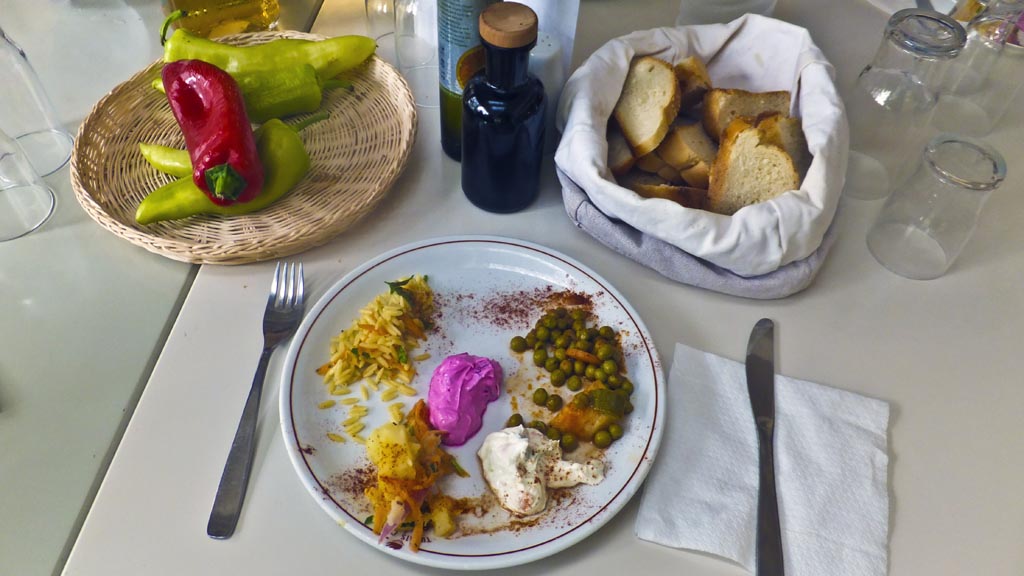
The area is full of restaurants catering to tourists. After our tour of the site, we headed to a “Zorba lunch” at a big restaurant where tables were piled with plates of very fresh and tasty Greek specialties.
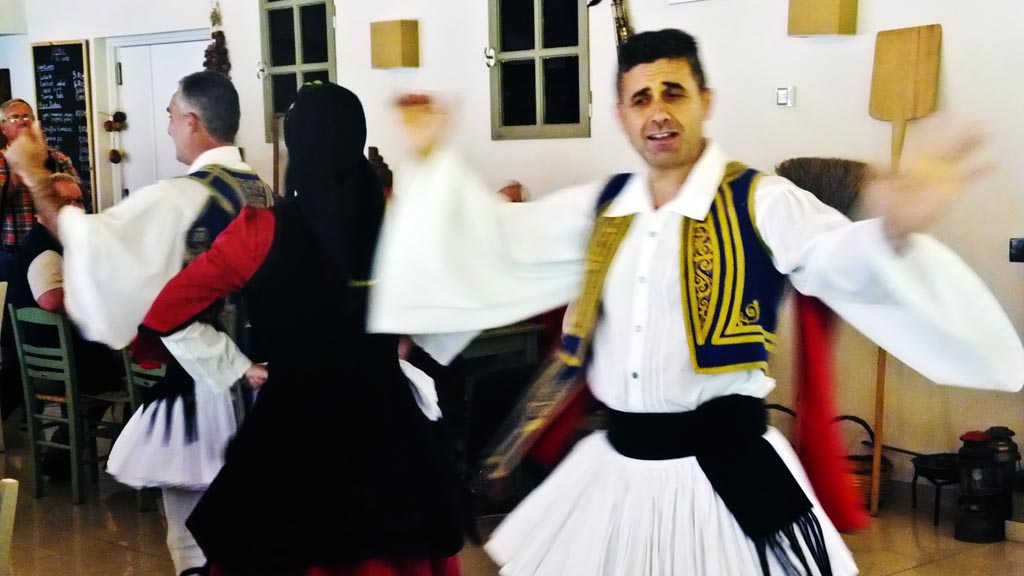
Of course, there was a band and dancers in costumes who encouraged audience participation in the traditional line dances. And also of course, we were given stacks of soft plaster plates to hurl crashing to the floor with great enthusiasm. The waiters here double as janitors for the cleanup of shattered pottery in all the aisles.
Greece is a Country in Dire Need of a Boost
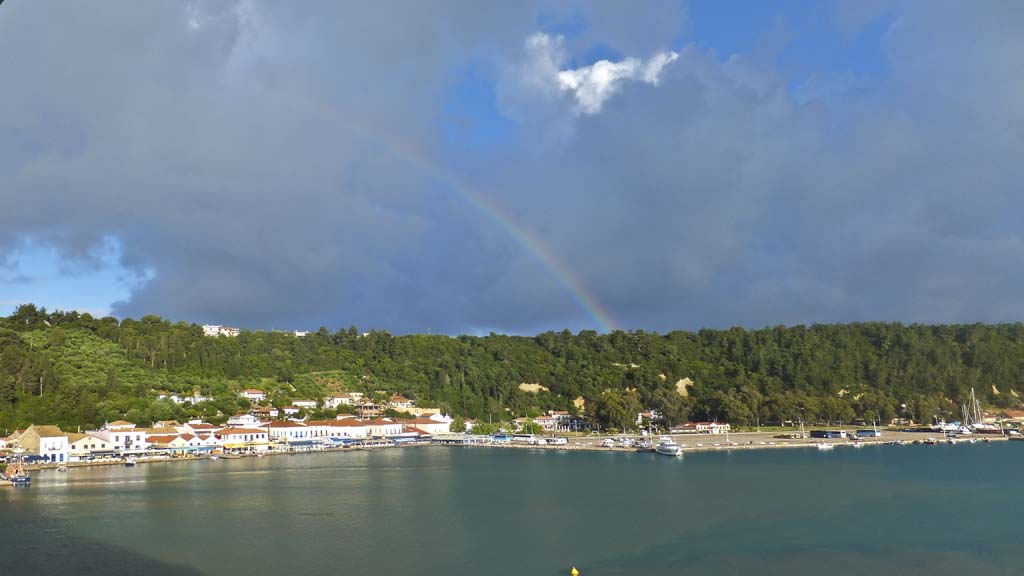
We all know that Greece is one of the economic laggarads of the European Union, and Katakolon is even more need of a kick start than the mainland. The sleepy souvenir shops only open when ships come in.
Saskia, our tour guide, explained that aside from tourism, the island depends on farming and fishing. The local produce consists mainly of watermelons and sweet potatoes.
Of course, there are olives, but the production is so limited that most of the olives grown here are used locally. There was hope for setting up a plant to process olive oil for fuel, but that has remained on the back burner.
Could it Work?
There isn’t a lot of spare cash available in Greece today for making a bid , especially since cost over-runs left a lasting deficit from the Athens games in 2004. But an international joint effort to make this Olympic Land into a major tourist attraction and boost the Greek economy in the long run..
It is true that the Olympics in Athens in 2004 didn’t exactly create the economic boom that boosters promised thcn but it did make tourist zones more attractive and stimulated tourism . So, a dedicated Olympic home site that puts practicality ahead of the big piles of cash involved in moving the show around every four years is worth considering.