
You can’t help but be awed by the beauty of the lush Costa Rican coast. And somehow things get more awe-inspiring as you go into the uplands and jungles. We’re about to experience a panorama of the country’s tropical nature and the plethora of wildlife that calls it home on a tour from Seabourn Encore doing a Central American cruise from Panama.
The ship docks at the long pier at Puntarenas, which is attracting a growing number of cruise visits but still has the faded, rustic feel of a fishing village. It’s got a long, rocky beach studded with driftwood, but its attraction is more as a jumping off point for tours to the rain forests and volcanic landscapes of Costa Rica’s Pacific coast where nature still rules supreme.
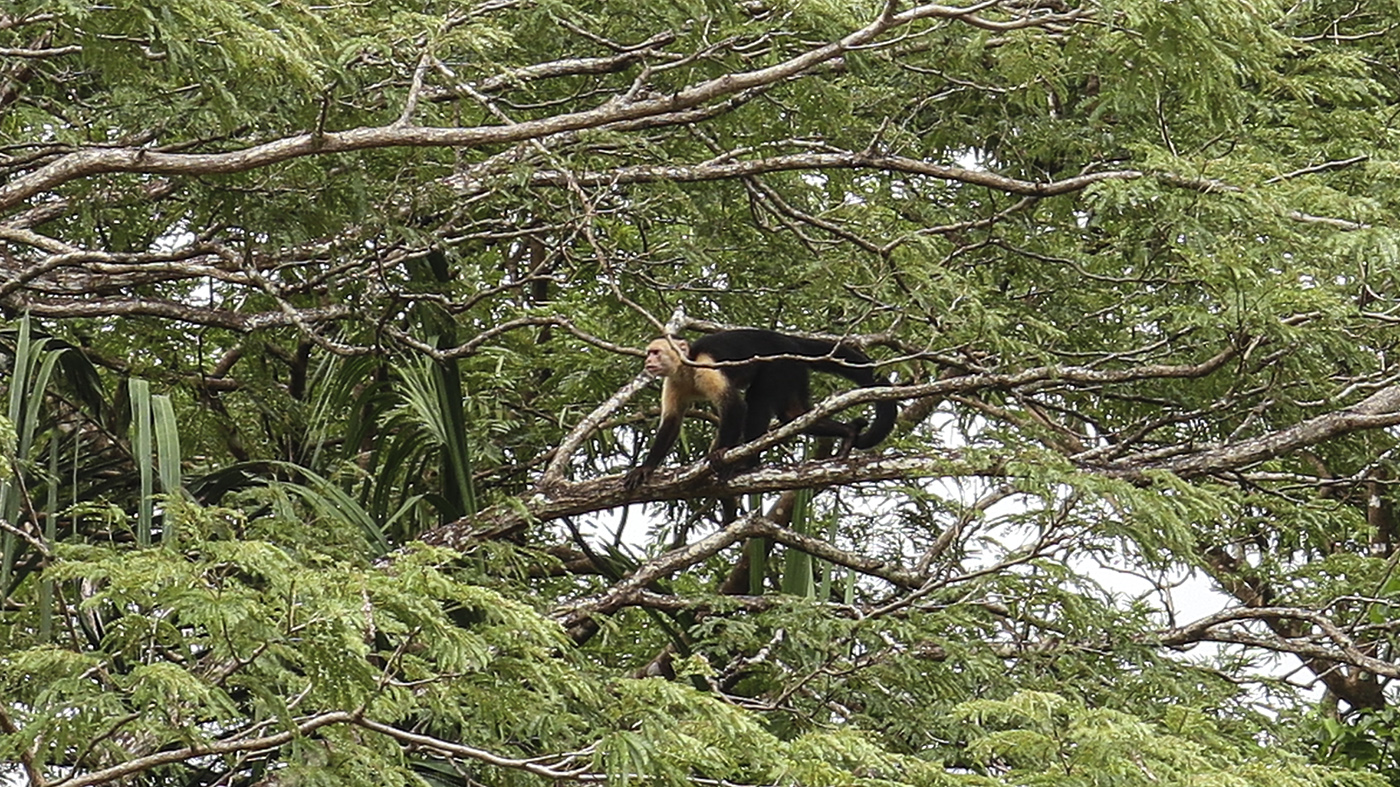
It’s going to be a day of viewing crocodiles, capuchin monkeys, egrets, storks and even bats that –believe it or not –you could describe as cute.
Our guide says we can call him Elvis and he comes from Philadelphia. No, it’s not the place known for its steaks and liberty bell. It’s the tiny settlement of Filadelfia, where we get a look at rural life in Costa Rica. It’s got the classic Tico village layout with a landscaped town square, a Catholic church on one end and a soccer pitch on the other and homes where chickens range freely.
Costa Rica has the size and approximate population of West Virginia, Elvis explains. But it’s also got vast reserves where animals are the only inhabitants. We’re headed for a tour in a small boat along the Río Tempisque through Palo Verde National Park, which is one of many large protected natural reserves in Costa Rica. Photos tell it better than words:
We’re treated to some fun facts from Elvis. Nearly 98 per cent of Costa Rica’s electricity comes from renewable sources. There are five active volcanoes to provide significant geothermal energy, and then come hydroelectric dams, then wind and solar and biomass from sugar cane after the sweetness is extracted. Solar isn’t used more because there’s a drawback in a place so filled with wildlife. Big arrays of solar panels look from the air like a lake to diving birds, so the panels have to be spaced far apart to not appear to be a big body of shining water.
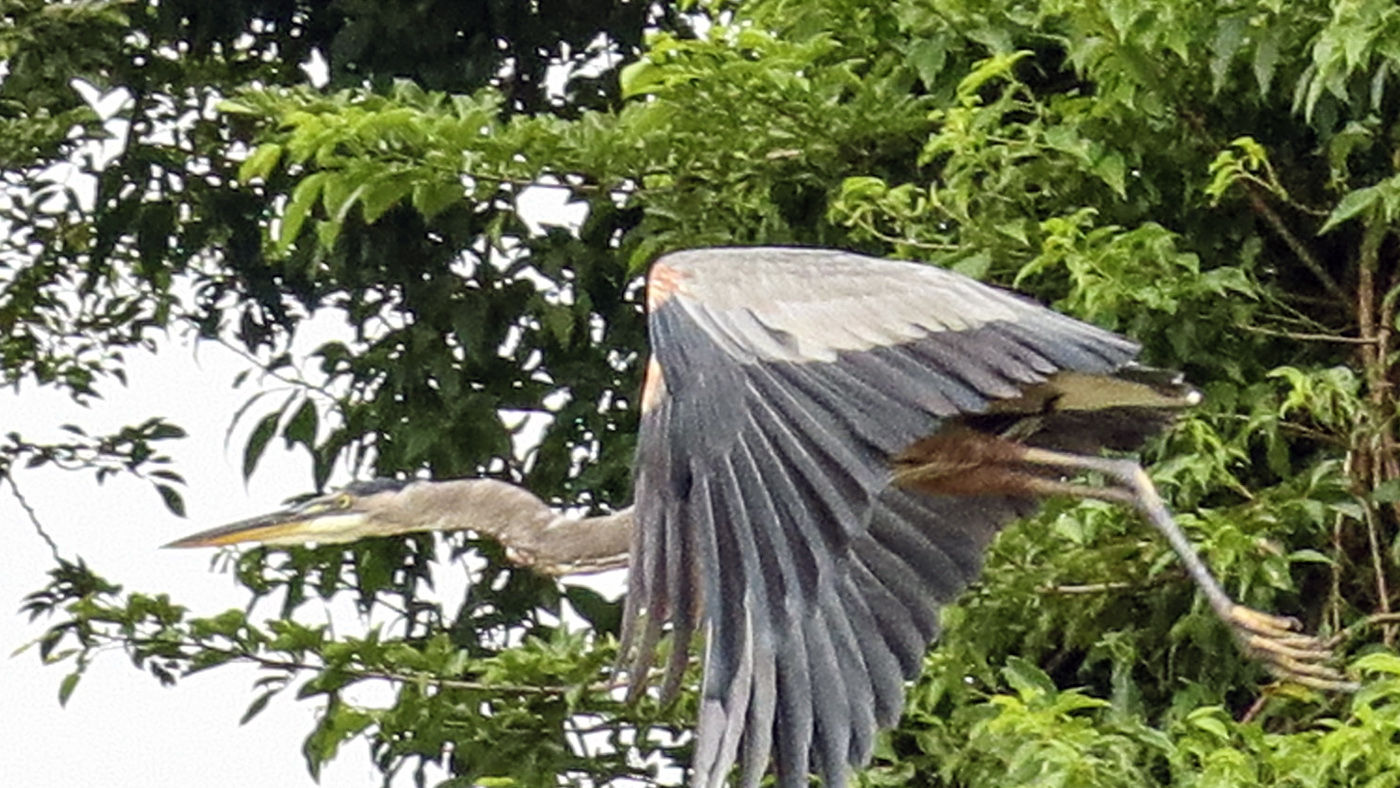
Arriving at aungle river, the show begins even before we board the boat, with monkeys howling in the trees and spectacular birds perching on branches along the shore. We’re about to see plenty, including night herons, wood storks, roseate spoonbills, cattle egrets, great egrets, and anhingas.

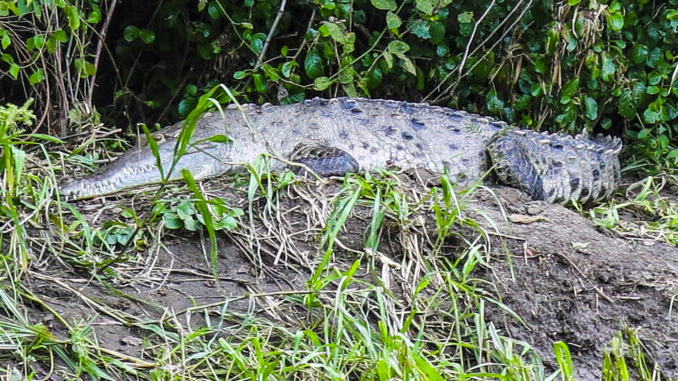
Crocodiles up to 14 feet long were confidently lazing on the shore. They have their own stretches of the shoreline and have worn grooves like landing strips in the banks of the river where they regularly slide into the water on the hunt for a fish. They know we’re in an aluminum boat that won’t stay long and so they usually don’t even move when we pull right alongside their spots while they’re napping. But if they decide to hit the water, they do it in an instant with a noisy splash.

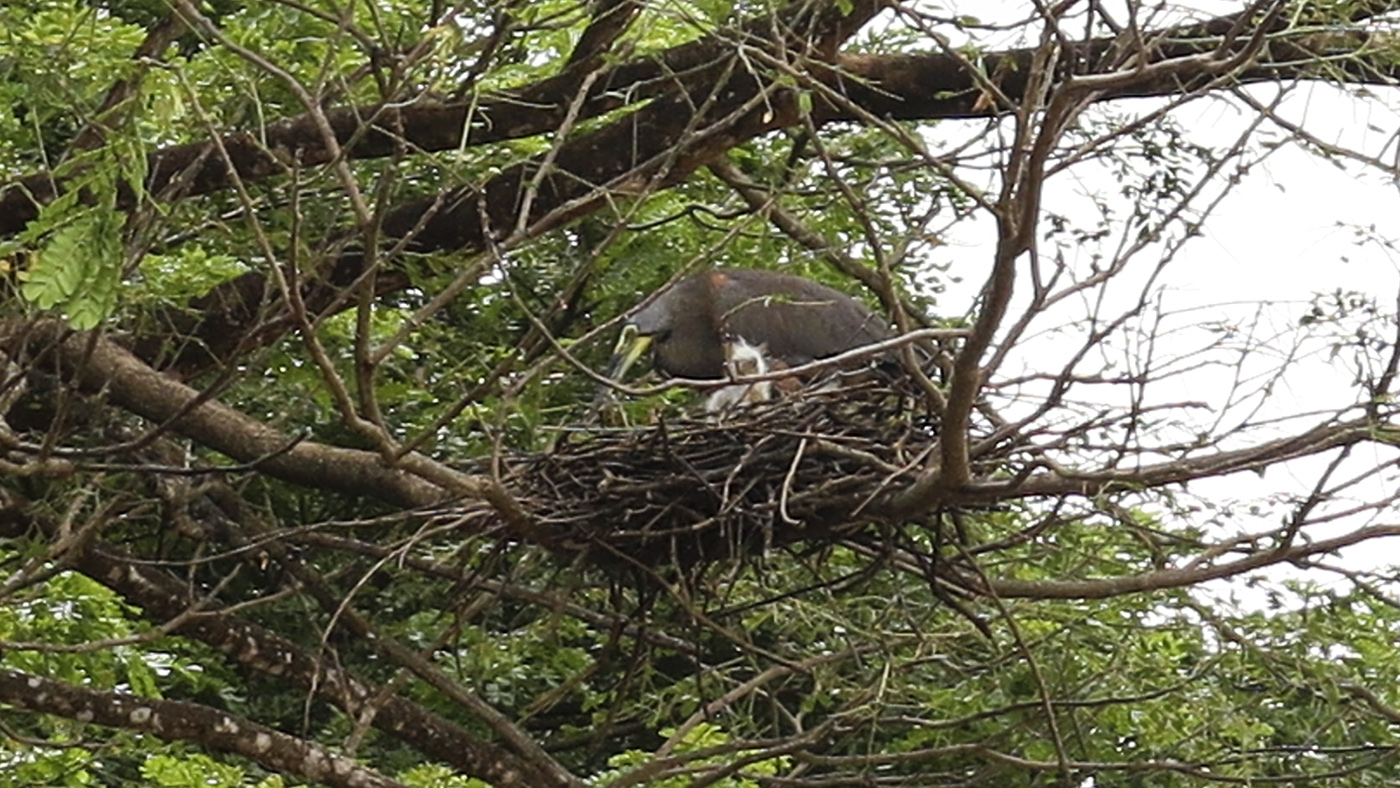
Beautiful but also formidable are bare-throated tiger herons. Believe it or not they are the prime predators of crocodiles. Only two per cent of baby crocodiles make it to adulthood because birds like this make them a big part of their diets, Elvis says. Crocs can also fall prey to lizards, eagles and other crocodiles before they get big enough to be top predators themselves.
On the way back to the Seabourn Encore, we stop at a plantation for a typical local lunch of rice and beans and get to try our hands at frying our own tortillas on iron pans over an open fire. It’s all washed down with cold Imperial beer and a cup of delicious coffee–of course Costa Rican.
It was a wonderful tour to cap a voyage of discovery along the Pacific coast of Central America and fitting introduction to what they call in Costa Rica Pura Vida–pure life.
Story by Wallace Immen, The Cruisington Times





1 Trackback / Pingback
Comments are closed.